For my proposal I want a place for people to take a step back from reality and rewind, in doing so the best way to do this is to appreciate environment outside of out houses and work place. The reason to why I wanted to refurbish the water fountain was because when I sat down in one of the benches that is located near the pond something was missing from my experience.
The Wintergardens was definitely was a nice place to chill on a sunny day however, it felt as if something was missing when I sat down in one of the benches and that was the sound of the water running down.
Here are some ideas I came across that gave me ideas on how i’m going to construct my own


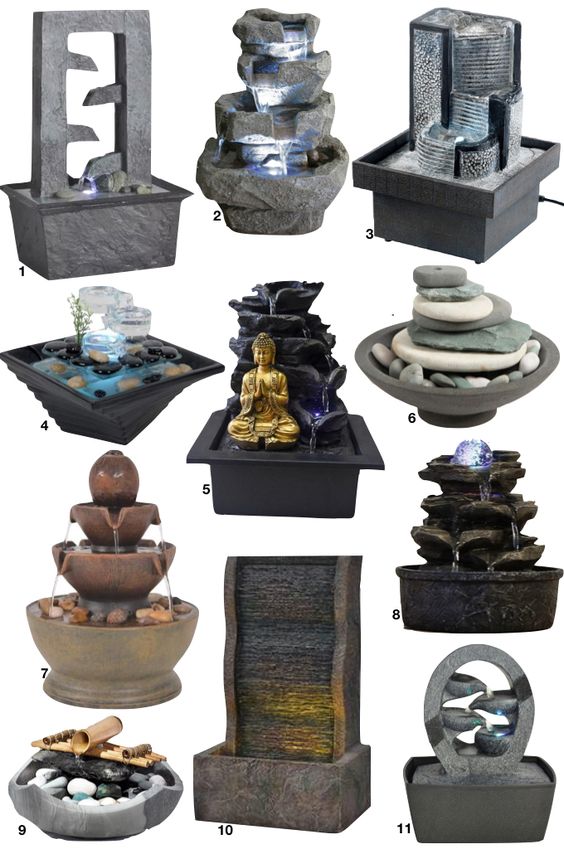

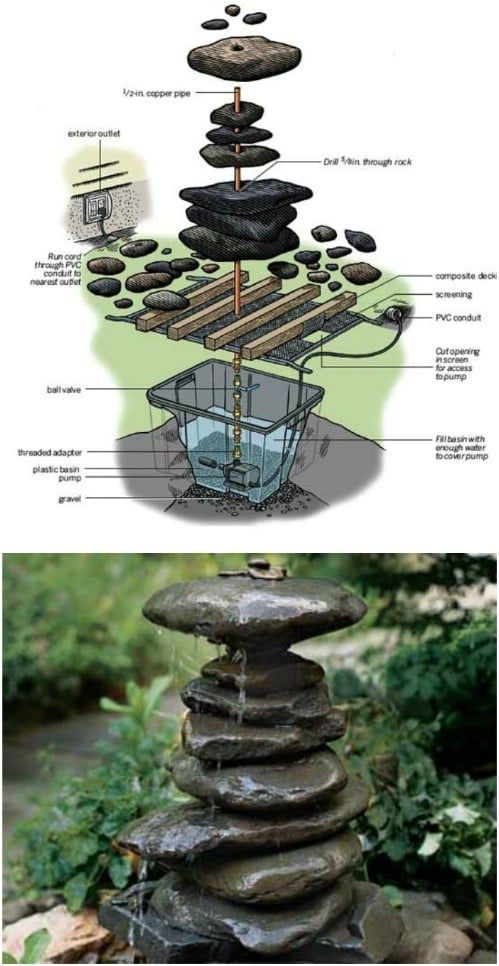
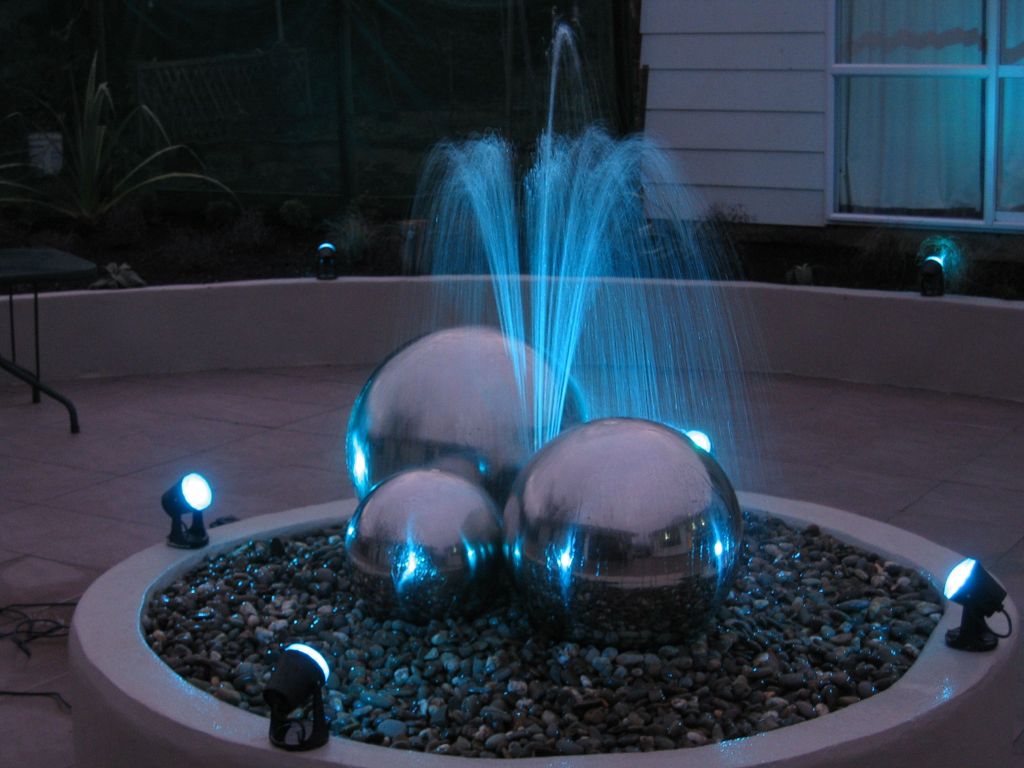

And here are some sketches I have drawn using the images above as a reference
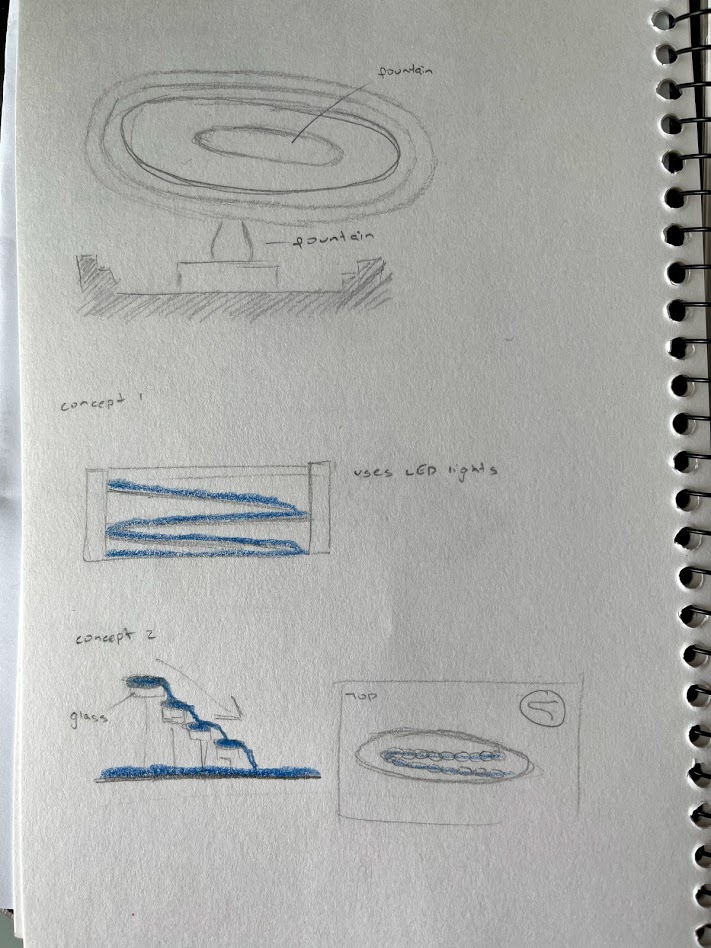
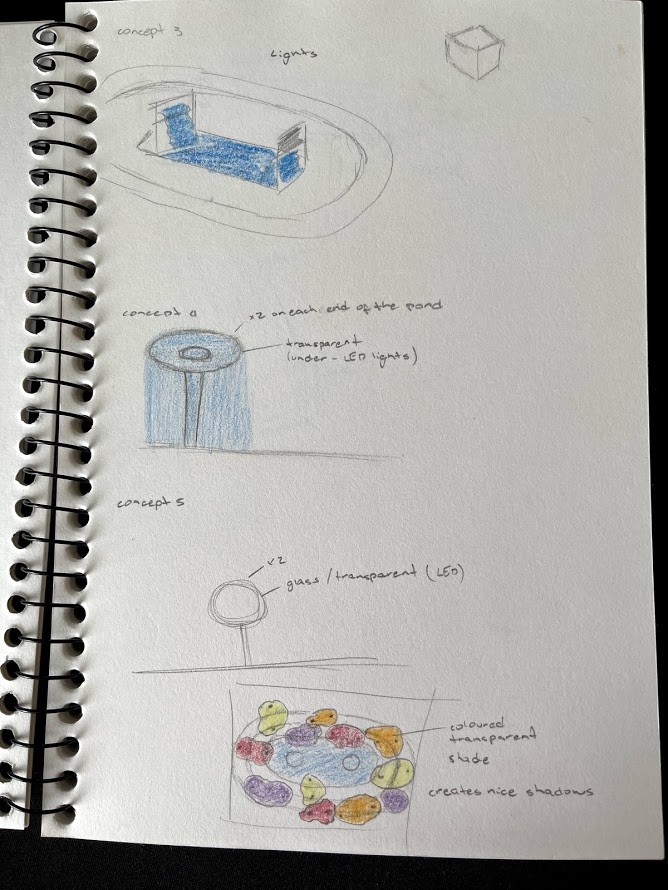
After creating 5 different ideas for my proposal I have decided to go with the 5th concept, but I am going to manipulate it a bit more to create 3 more different concept using my other 4 designs as a reference.
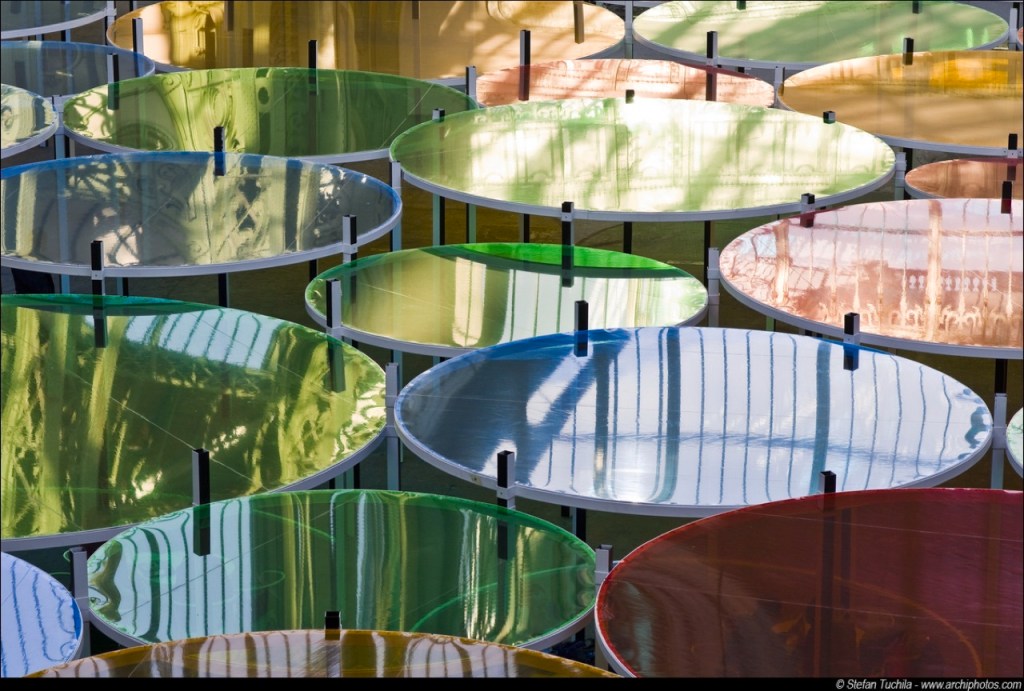
I want to occupy a few of the empty space with some sort of coloured glass shelter inspired by Daniel Buren Monumenta in 2012.
My concerns of this proposal
- Multiples of poles to support the glass sheltered that might annoy other people in their way
- No accessibility for people with disability
- In order to get to the water fountain you have to go down a few steps
Monumenta 2012 / Daniel Buren
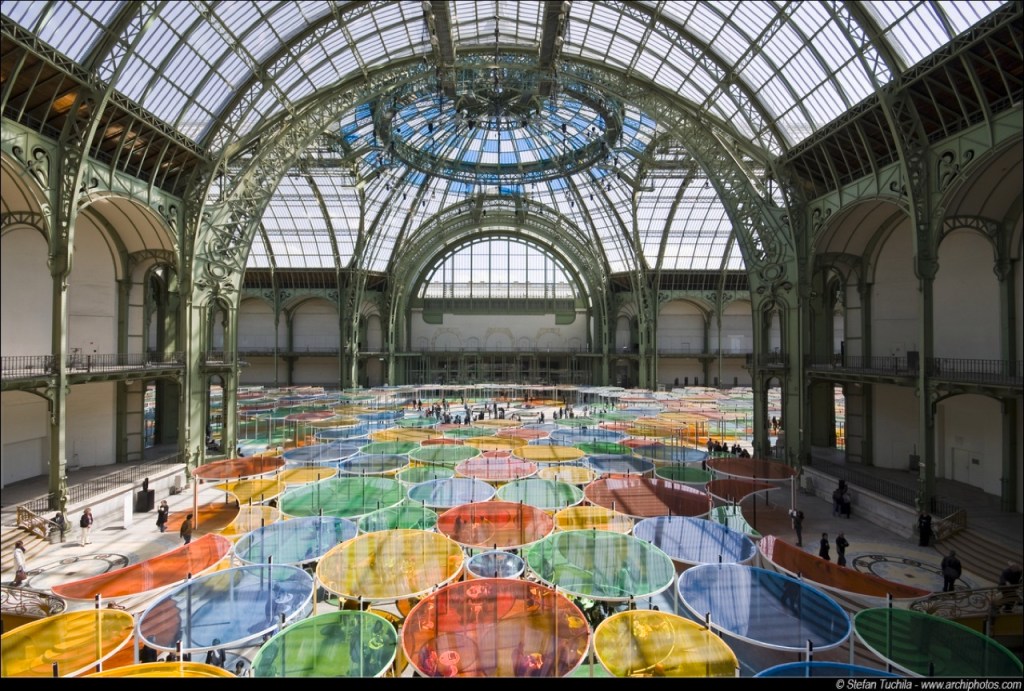
Stefan Tuchila, an architecture photographer based in Bucarest/Paris shared with us a set of images of the latest Monumenta exhibition in Paris. After the amazing installation by Anish Kapoor last year, it was Daniel Buren‘s time to take this challenge and create a concept for the 2012 edition.
each year the french ministry of culture and communication invites a leading contemporary artist to develop an installation which investigates the architectural space of the grand palais in paris. the monumental scale of the gallery provided the form for their annual exhibition, monumenta. this year, french artist daniel buren has developed a temporary, site-specific installation to fill the interior of the expansive glass-domed hall. the massive venue was originally developed for the 1900 universal exhibition. for its fifth year, after guest artists anselm kiefer, richard serra, christian boltanski, and anish kapoor, daniel buren now takes the stage with his investigation of 13,500 m2 of space. the colorful reinterpretation of this major public space takes place during the third la triennale for contemporary art for paris.
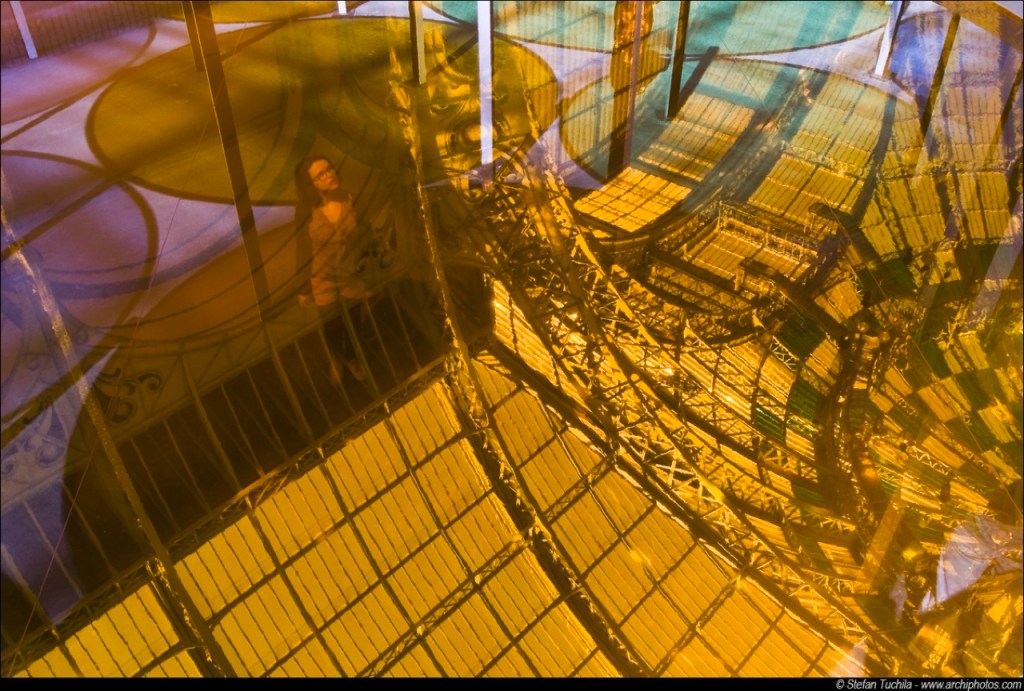
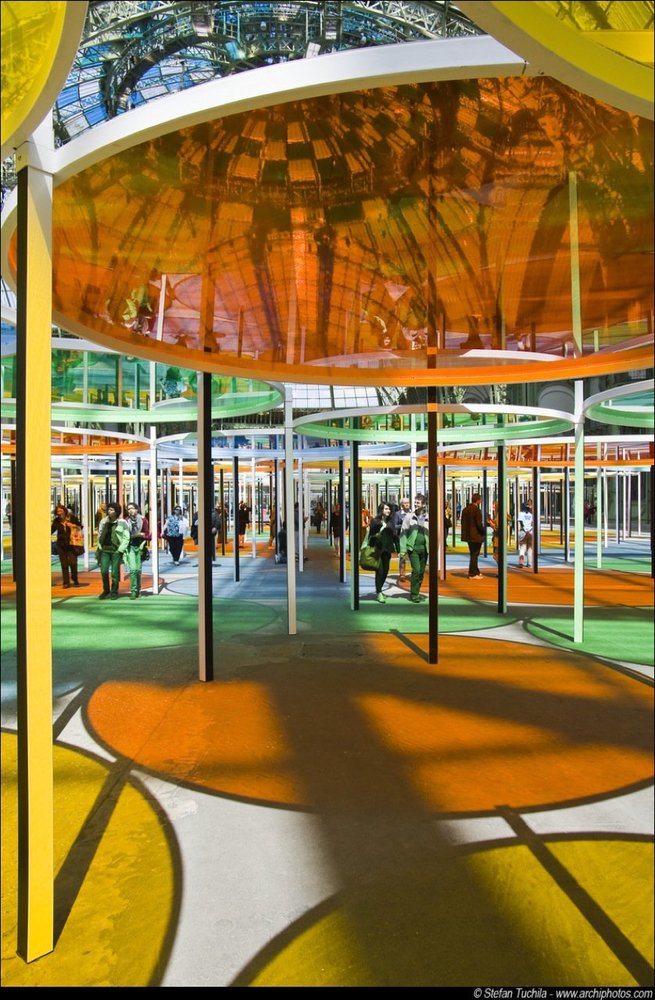
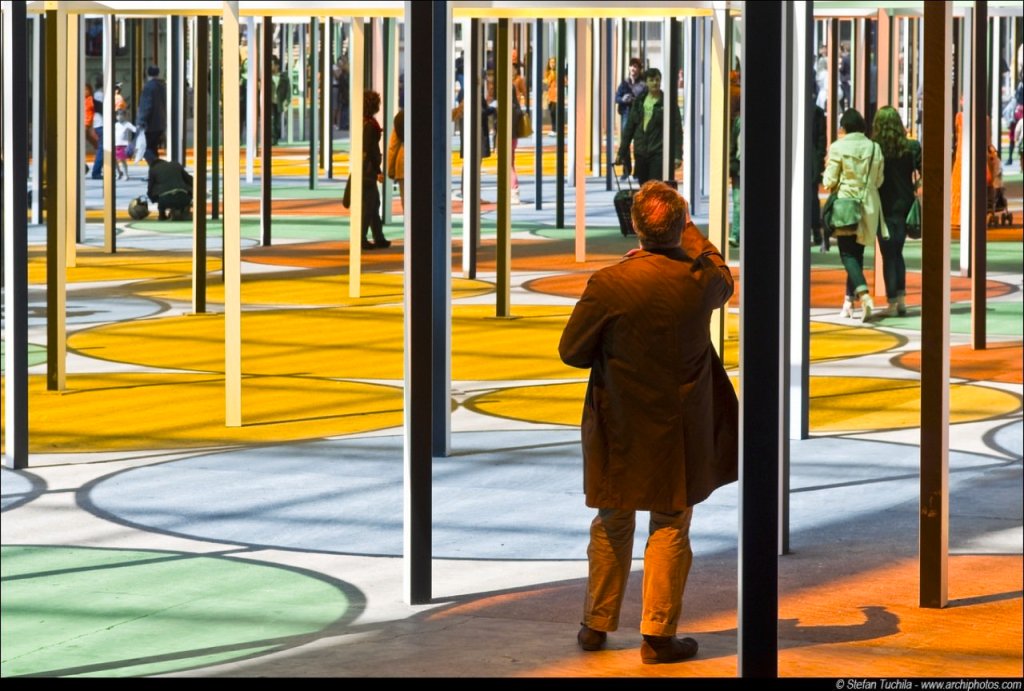
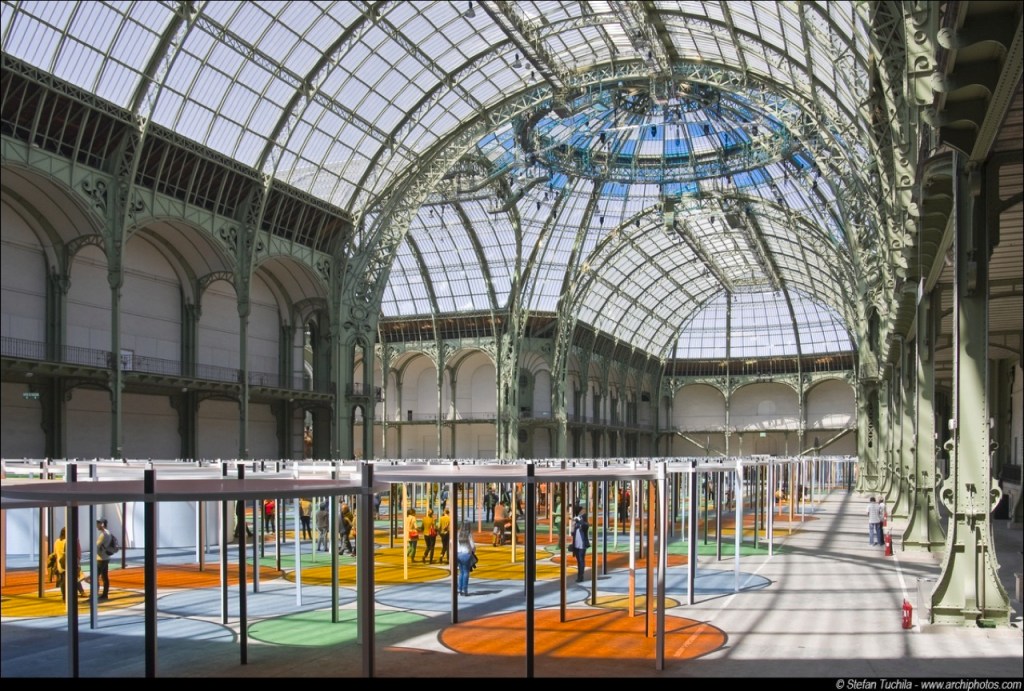
A UNIQUE CONCEPT
A unique concept of universal appeal
MONUMENTA is an ambitious artistic encounter unmatched anywhere in the world, organized by the French Ministry of Culture and Communication. Each year MONUMENTA invites an internationally renowned contemporary artist to appropriate the 13,500 m² of the Grand Palais Nave with an artwork specially created for the event.
Contemporary art accessible to all
A new kind of artistic performance, MONUMENTA is open to all, a way of discovering a unique event in which great French and foreign artists succeed each other each year. After the success of the first three MONUMENTA events entrusted to German painter Anselm Kiefer in 2007, to American sculptor Richard Serra in 2008, to French artist Christian Boltanski in 2010, each drawing close to 150,000 visitors in five weeks, then the British Indian-born artist Anish Kapoor whose work in 2011attracted over 270,000 visitors in six and half weeks, it is Daniel Buren- one of the most highly recognized and honoured artists, by both his peers and the public – who will take up the challenge in May and June 2012.
The Grand Palais, a prestigious setting dedicated to a unique event
The 13,500-square-metre Nave of the Grand Palais, with its stunning 45-metre glass vault, hosts new works created specifically for the event. In the heart of Paris, the most visited city in the world, adjacent to the Champs-Elysées, the Grand Palais is one of the French capital’s finest architectural gems.
MONUMENTA
Marc Sanchez: Daniel Buren, you have been working on this project for a long time, but what struck you most when you were asked to produce a work for this building.
Daniel Buren: First of all, I would like to say that this building, because of its size, its beauty and its history, is one of the most difficult places for an exhibition. Even more than its architecture, the really striking thing about this place is its atmosphere, its lightness, the impression of being outside when you are inside. The spirit of the place is sunshine and light.
MS: 2012 will be the fifth Monumenta show. Have you taken into account the way the four other artists worked in the building and the works they showed here, the way they reacted to the space?
DB: Obviously! When you are not the first, you can see who went wrong and who managed to pull it off. It is something of an advantage. It is interesting to analyse the causes of success or failure. As the place itself is primordial, more than in other venues, even the artists who have a feeling for space, a feeling for the site, can go wrong, and if they make a mistake here, it is fatal. And artists whose work does not take the site or space into account run the risk of falling flat here, if they are not careful.
REFLECTION
Daniel Buren has sometimes used reflections – in mirrors, shiny materials or water. The reflection’s primary property is the inclusion of the space around the work (it is impossible to reflect just the work itself), stressing the artist’s position on the fundamental interrelation between the object and its context.
Moreover, a reflection does not stay still, it depends on the viewer’s position. Here we find another idea defended by Daniel Buren: no single viewpoint dominates. The mirror therefore contextualises the object in relation to the spectator’s movement: there are an infinite number of possible viewpoints and they are always fragmentary.
In some cases, reflection is used to obtain an optical effect: the impression of infinity when two mirrors are placed face to face, multiple reflections in corners, disappearing borders or startling periscopic vision.
Apart from these effects, Daniel Buren uses the mirror as a “third eye” so we can see what is in front and behind us simultaneously. The mirror “is not necessarily there to reflect something, but to show particular things that only mirrors can show. I would go so far as to say that the mirror never imitates anything, but always shows something else. More than that, it transforms the space and lets us see more and differently.”
Reflection offers a new, dynamic way of seeing. It also refers the work to something else, to the exterior or to the viewer. The question of the mirror obviously intrigued many twentieth-century artists, but Daniel Buren’s references go much further back, to the Renaissance, with the regret that the “reflective pieces on some of Uccello’s battle scenes” have not survived.
 Angel
Angel 