In week 4 we started skecthing out our ideas for our own bath house proposal
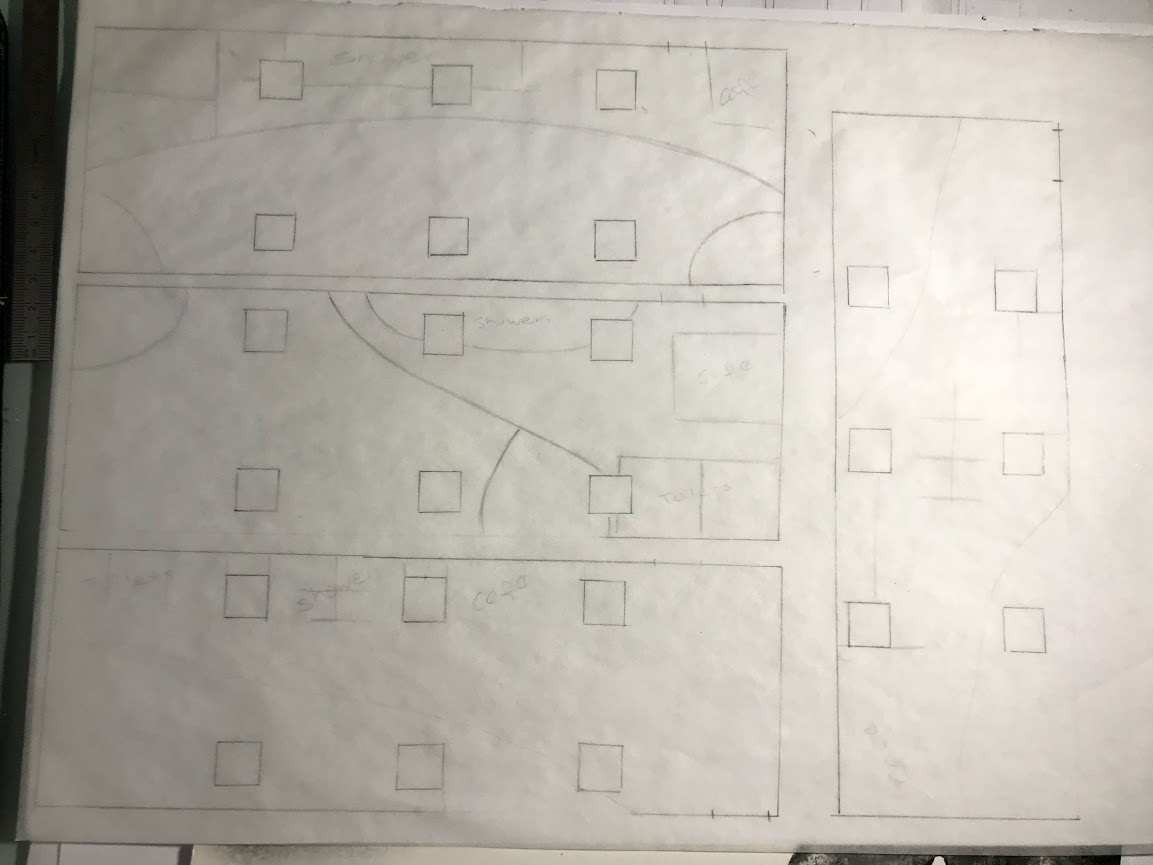
Below shows a few sketches for my bath house floor plan ideas. For every sketches i at least want one big unisex bathing area that has a big opening to the external courtyard/ forest in doing so the customers will experience an outdoor/ more open area to the nature.
For every sketch i considered a cafeteria, bathroom/ changing room, and lockers. Some sketches i wanted to consider one small pool for hot and cold, this helps for our blood circulation.

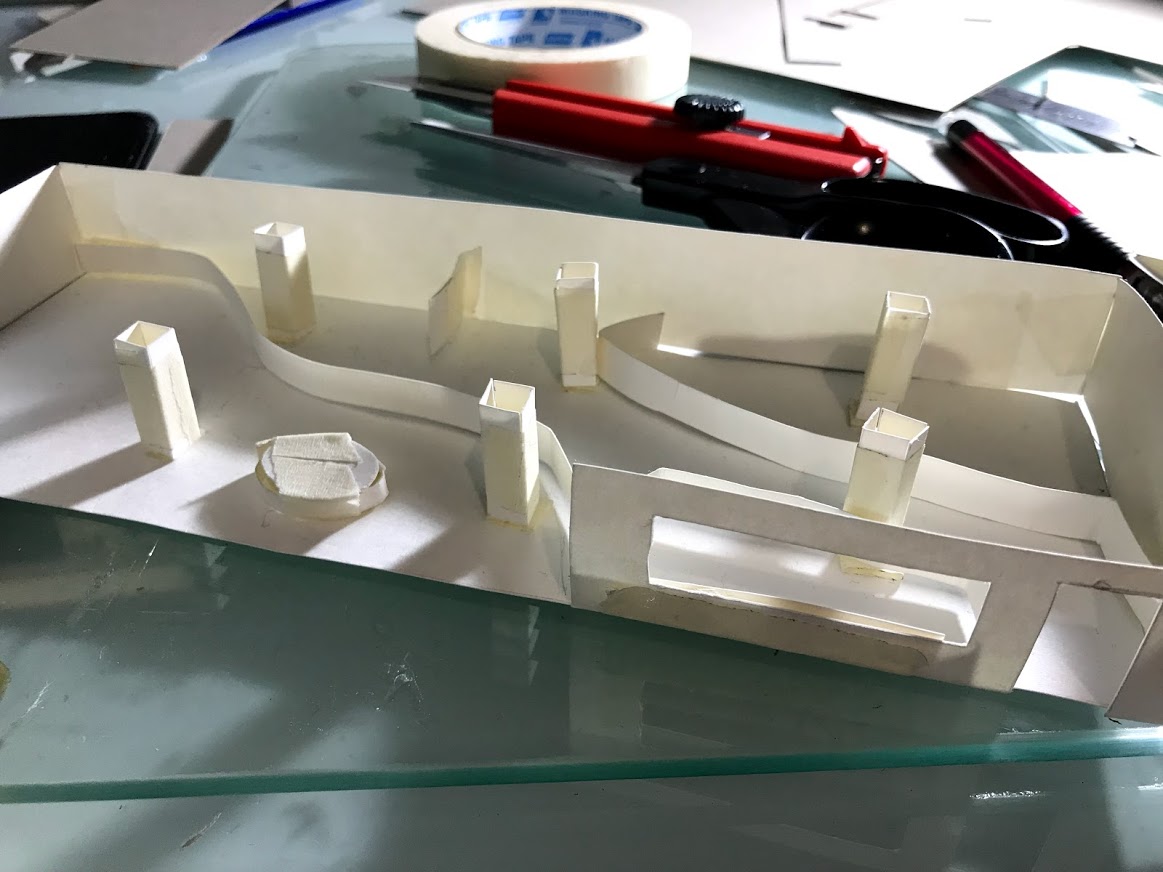
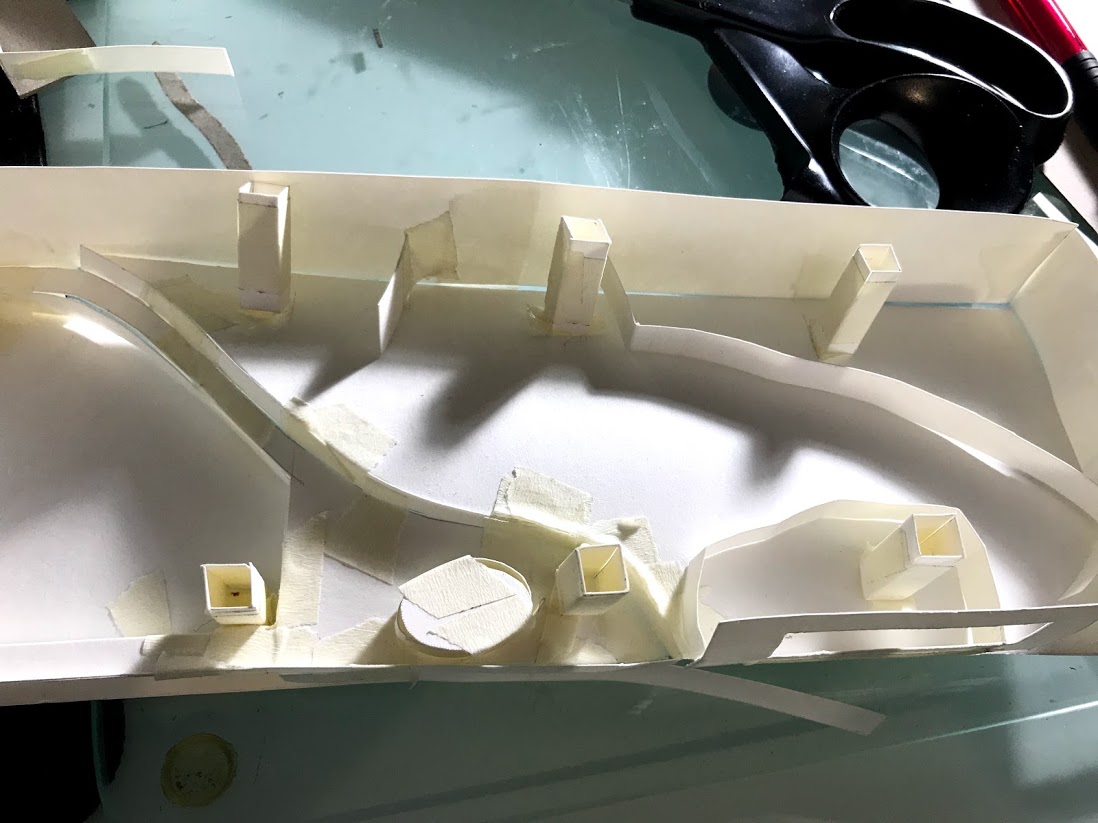
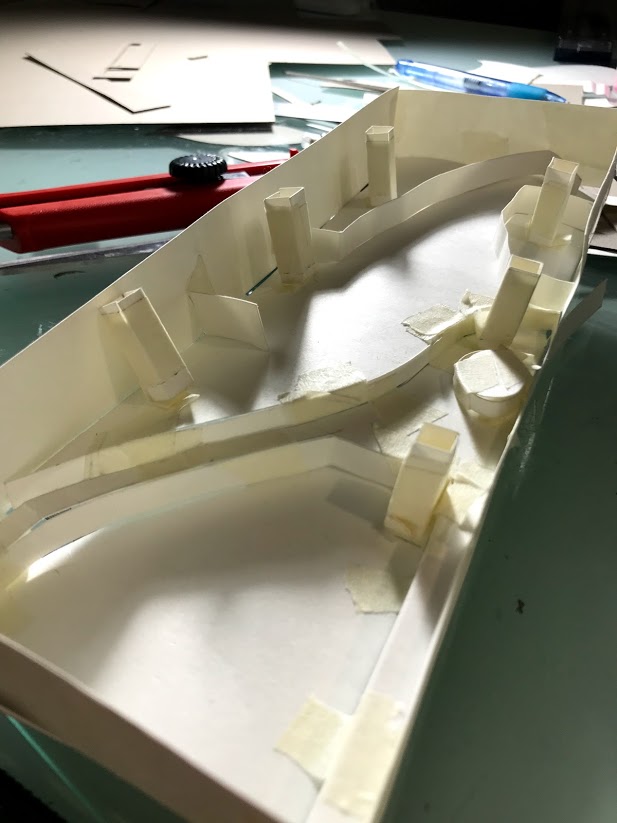
Below are my rough initial model of my 1:100 bath house
First Set Model
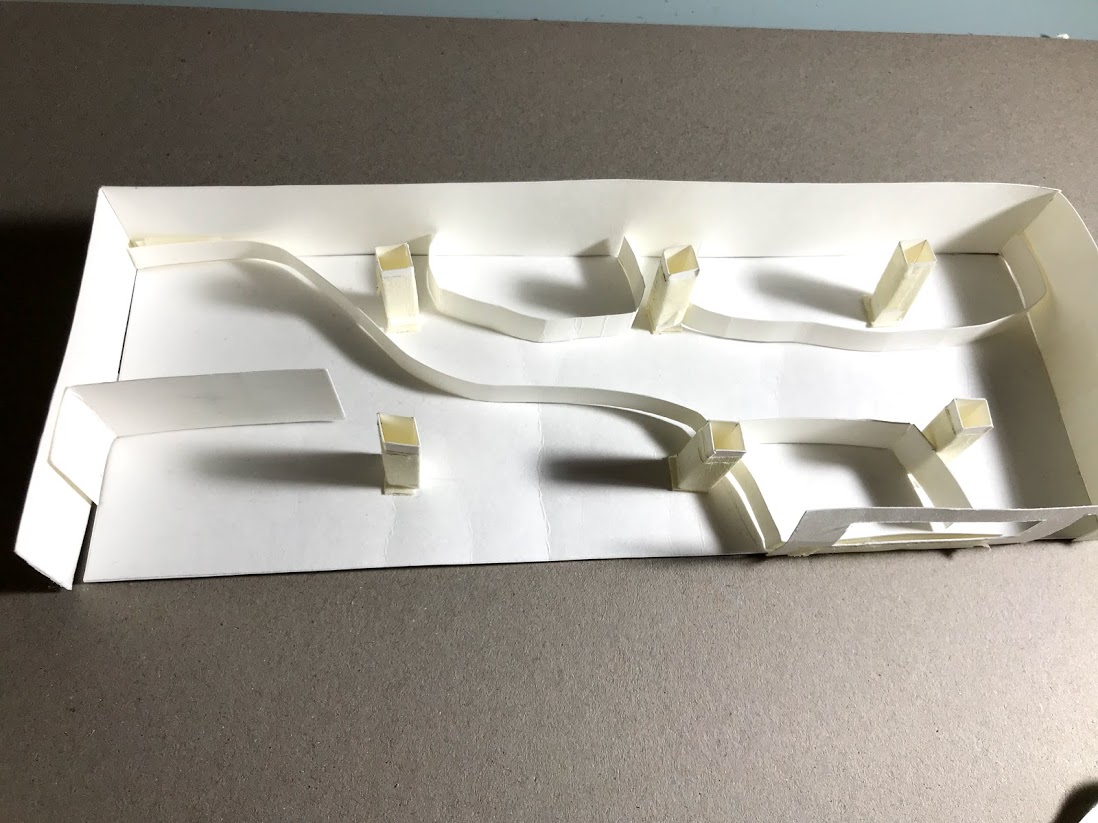
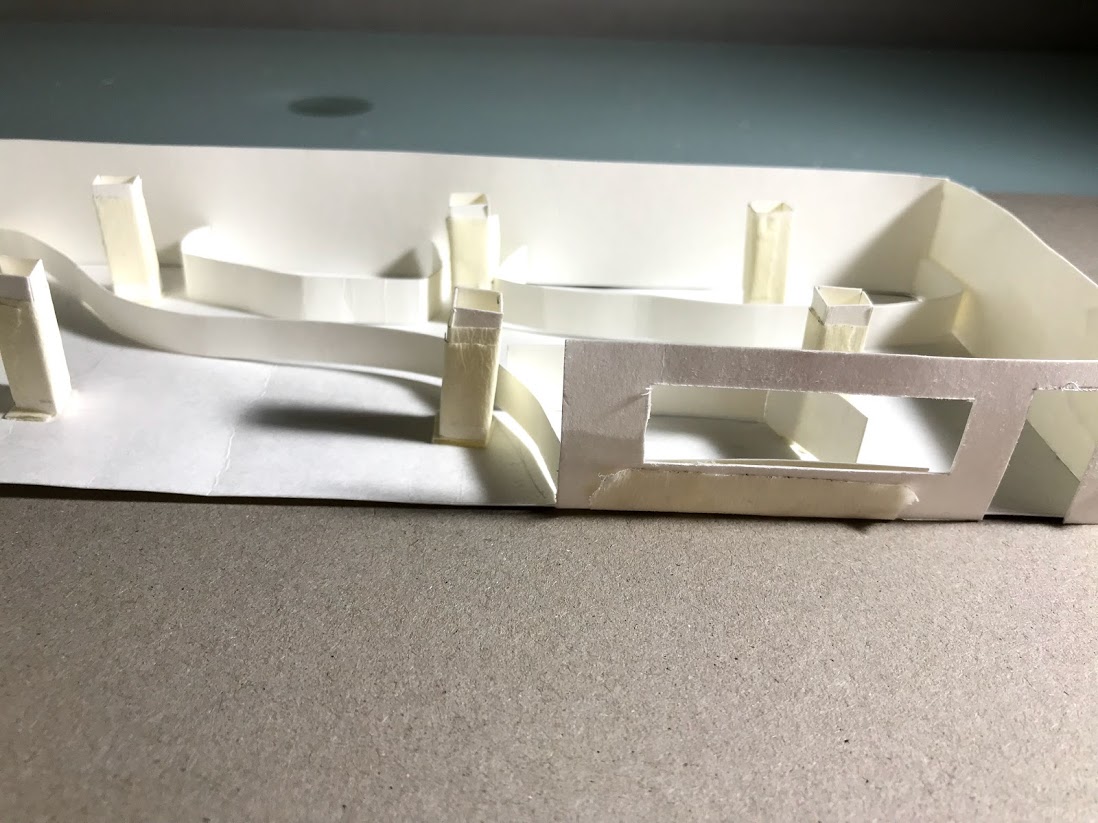
Second Set Model
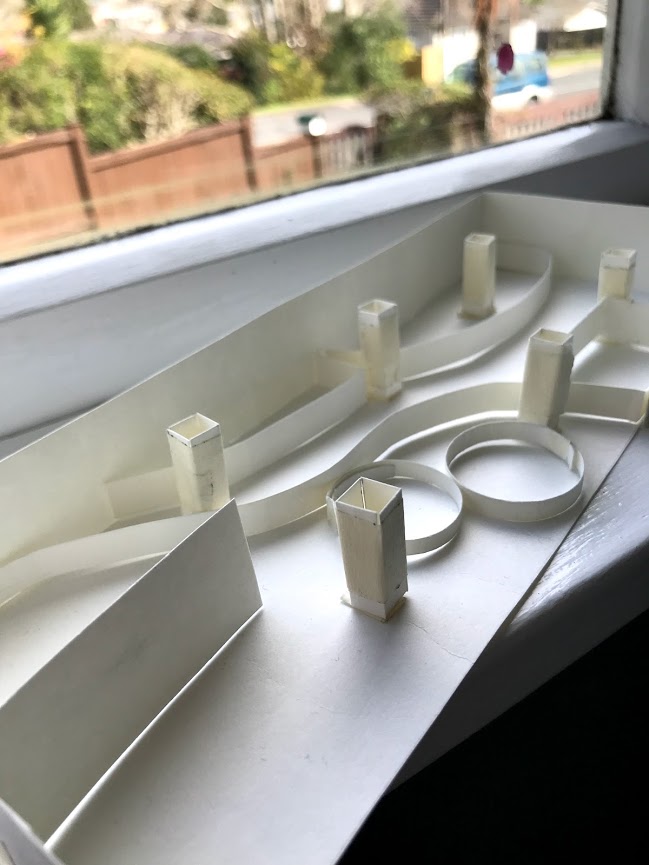
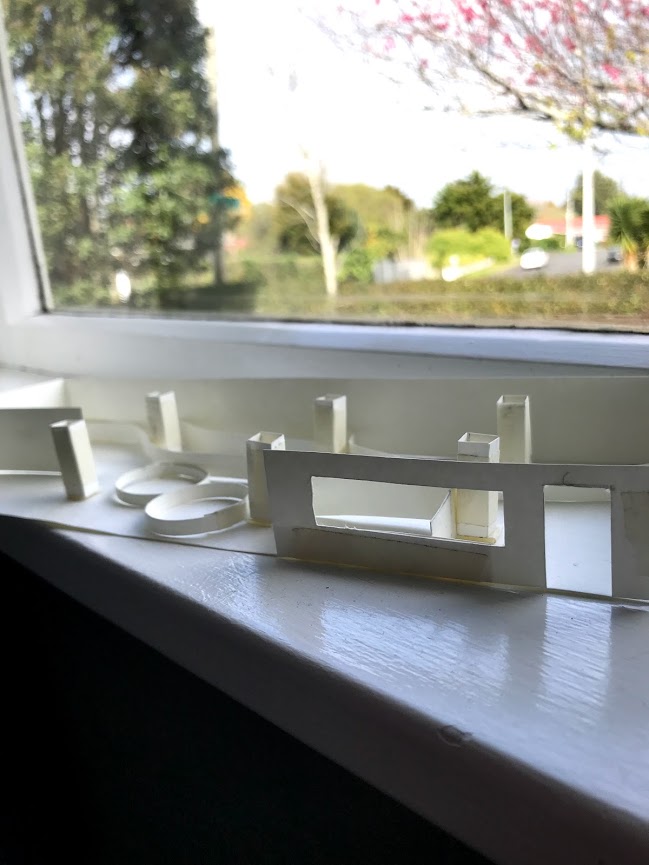
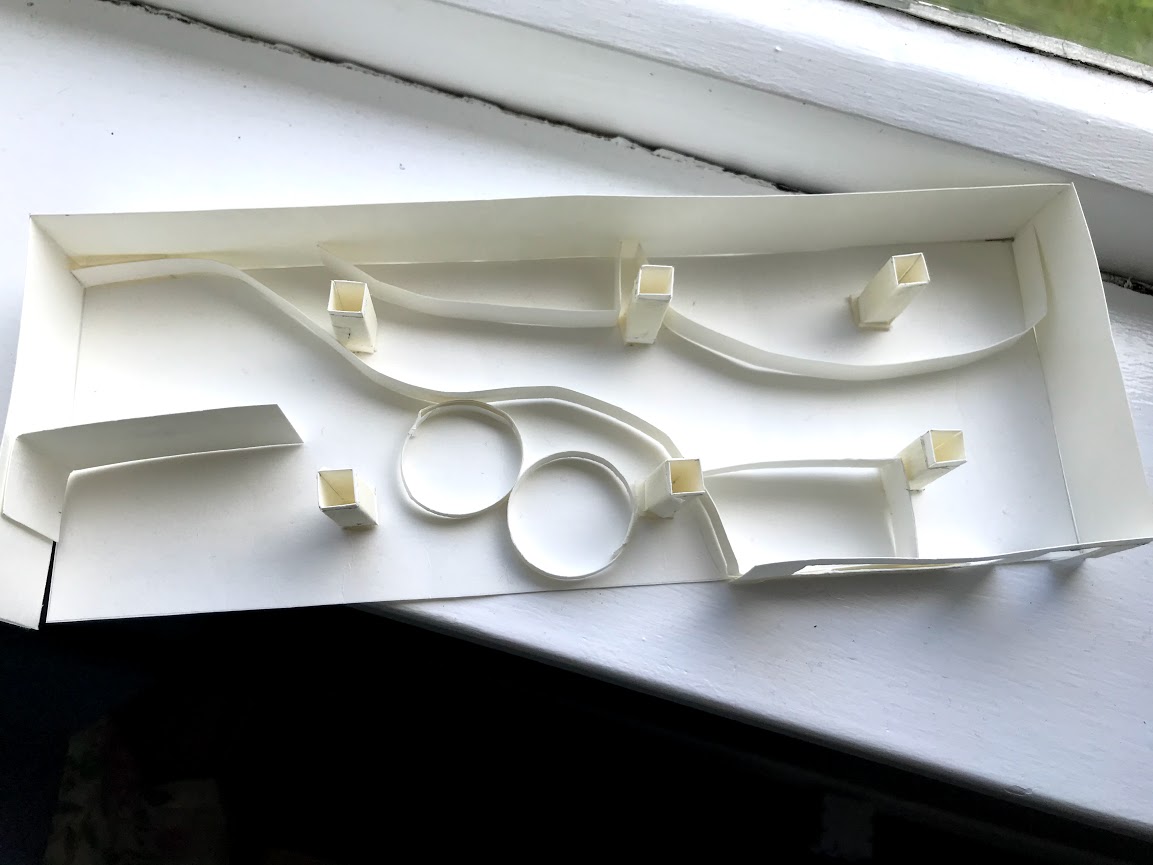
Third Set Model & Final
For my forest i decided i wanted NZ native trees which are:
Harakeke/flax, Kauri, Kōwhai, Kawakawa Mānuka/Kānuka (Kānuka Featured), Nīkau, Pūriri, Tī Kōuka (Cabbage Tree)
(All info below can be found in DoC)
Harakeke/flax:
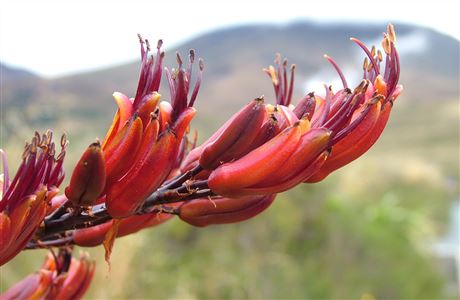
Quick facts
- Flax is unique to New Zealand and is one of our most ancient plant species.
- Flax bushes will often support a large community of animals, providing shelter and an abundant food resource.
- Tui, bellbirds/ korimako, saddlebacks/tīeke, short tailed bats/pekapeka, geckos and several types of insects enjoy nectar from the flax flower.
- Flax snails, a rare land snail living only in the Far North, often shelter under flax bushes. These snails don’t eat any part of the flax, but rather they munch on fallen leaves from native broadleaved trees.
- Harakeke was the name given to this plant by Māori.
- The first European traders called it ‘flax’ because its fibres were similar to that of true flax found in other parts of the world.
- Although we still call it flax today, harakeke is really a lily.
Kauri:
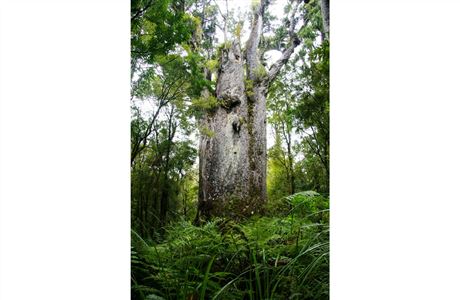
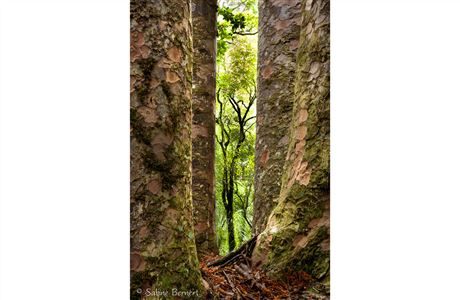
Kauri are among the world’s mightiest trees, growing to over 50 m tall, with trunk girths up to 16 m, and living for over 2,000 years.
Maori used kauri timber for boat building, carving and building houses. The gum was used as a fire starter and for chewing (after it had been soaked in water and mixed with the milk of the puha plant).
The arrival of European settlers in the 1700s to 1800s saw the decimation of these magnificent forests. Sailors quickly realised the trunks of young kauri were ideal for ships’ masts and spars, and the settlers who followed felled the mature trees to yielded huge quantities of sawn timber of unsurpassed quality for building.
The gum too, became essential in the manufacture of varnishes and other resin-based products. The gum was obtained through digging, fossicking in treetops, or more drastically, by bleeding live trees.
More forest was cleared as demand for farmland and timber increased in the early and mid 20th century.
Kōwhai:
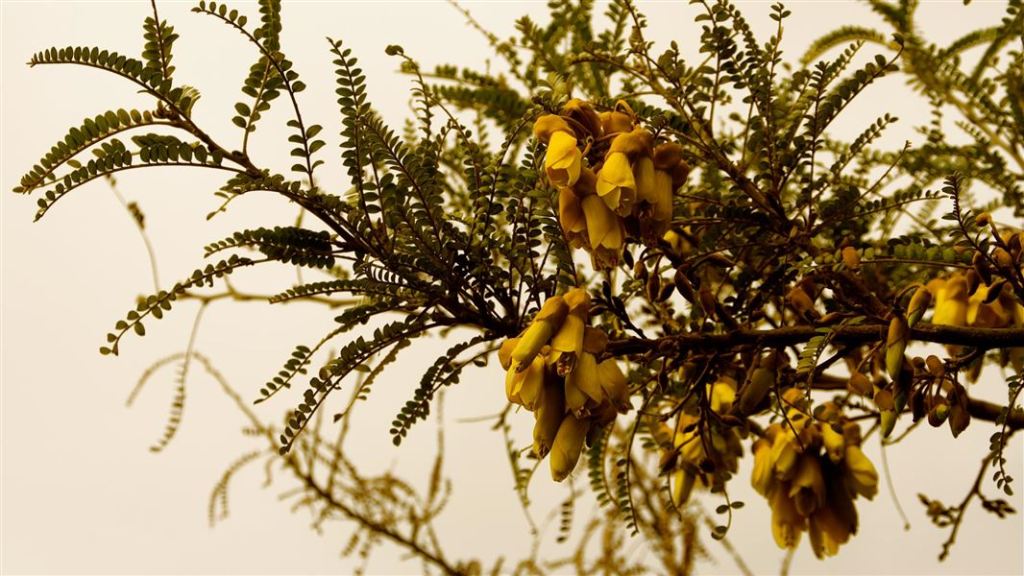
Quick facts
- Kōwhai trees have small leaflets and juvenile branches on some species are twisted and tangled.
- They grow from a seed in the ground to become a tree up to 25 m high.
- It’s found throughout New Zealand in a diverse range of habitats from riparian forests, coastal cliff faces to inland grey scrub communities.
- Native birds such as the tui, bellbird, kākā and New Zealand pigeon/kererū/kūkū/kūkupa all benefit from kōwhai trees.
- Tui and bellbird and New Zealand wood pigeon/kererū/kūkū/kūkupa feast on leaves and flowers – kōwhai are an important seasonal nectar food source for them.
- Māori hold the tree in high esteem, valuing the durability of its hard wood and its many medicinal properties.
Mānuka/Kānuka (Kānuka Featured):
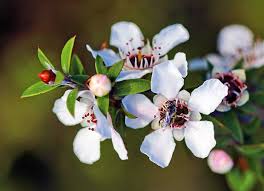
Chemical tests have shown that mānuka/kahikātoa pollen, and honey derived from it, contains powerful insecticides and anti-bacterial agents that can help fight intestinal worms and bacterial infections. Mānuka/kahikātoa oil is now sold in New Zealand and overseas in various cosmetics and health care products.
Mānuka/kahikātoa is common throughout the North, South and Stewart Islands in lowland to low alpine regions up to 1800 m above sea level. It can be found in many different habitats including wetlands, river gravels and dry hillsides. When mature, it is very tolerant of drought, waterlogging, strong winds and frost and it can grow at less fertile, colder, wetter and more acidic sites than kānuka.
With the notable exception of Taranaki, kānuka is common throughout lowland and mountain scrub and along forest margins of the North and South Islands from the Three Kings Islands to about Kawarau Gorge and Dunedin in Otago. It is not found naturally south of there. The species has a wide range of tolerances and has been found growing around active geothermal systems. It can be found from sea level to 1800 metres.It grows well on all soil types except water-logged soils, and is tolerant of wind, drought and frost.
Nīkau:
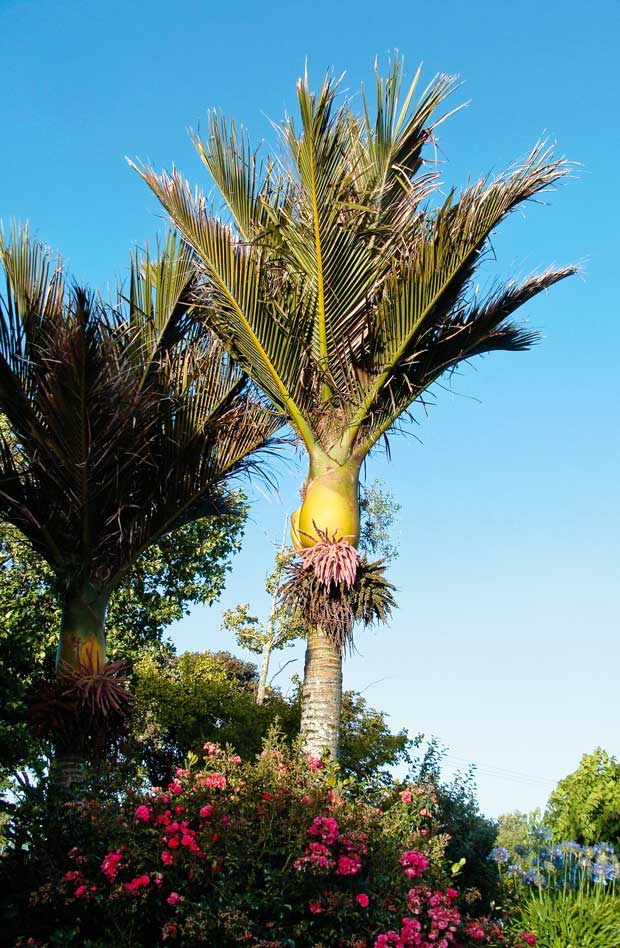
Quick facts
- The nīkau sprouts large clusters of mauve flowers that burst from the base of the lowest branch. The flowers are sticky and sweet with nectar, which attracts insects, especially bees.
- While insects are probably the main pollinators, birds such as tui, bellbirds and silvereyes also enjoy the nīkau nectar. Flowers occur throughout the entire year.
- The bright red nīkau fruits take about one year to ripen and are an important food source for native birds, particularly the wood pigeon/kererū and kākā.
- Nīkau palms have always had importance in Māori life. The leaves were used to thatch houses, to wrap food before cooking, and to weave into hats, mats, baskets, and leggings for travelling through rough undergrowth. The growing spikes can be taken from the tree about every eight months without killing it.
- From the outer portion of the trunk, Māori made storage containers and pots. The hard berries were made into necklaces or eaten when green. The immature flower is edible and can be cooked and eaten like cauliflower. The heart of the developing leaves (called rito) can also be eaten raw, but taking the shoots kills the whole tree.
- The nīkau is very slow-growing. Research conducted in lowland forests near Auckland found it takes 40–50 years to begin to form a trunk and about 200 years to reach 10 m tall. On average two fronds are shed per year leaving behind a leaf scar on the trunk which can be used to give a rough indication of age since the trunk began forming.
- The nīkau is closely related to the betel nut, the seeds of which are used as a laxative. The centre shoots of nīkau can be used in the same way.
Tī Kōuka (Cabbage Tree):
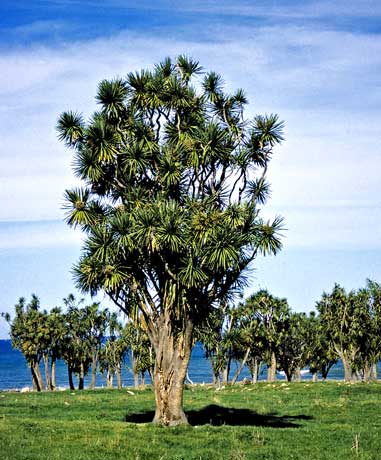
Quick facts
- The trunk of the cabbage tree is so fire-resistant that early European settlers used it to make chimneys for their huts. Conveniently, too, the leaves made fine kindling. They also brewed beer from the root.
- Cabbage trees are one of the most widely cultivated New Zealand natives and are very popular in Europe, Britain and the U.S. In the U.K. they are known as Torquay palm.
- Cabbage trees are good colonising species, growing happily on bare ground or exposed places.
- Their strong root system helps stop soil erosion on steep slopes and because they tolerate wet soil, they are a useful species for planting along stream banks.
- Māori used cabbage trees as a food, fibre and medicine. The root, stem and top are all edible, a good source of starch and sugar. The fibre is separated by long cooking or by breaking up before cooking.
- The leaves were woven into baskets, sandals, rope, rain capes and other items and were also made into tea to cure diarrhoea and dysentery.
- Cabbage trees were also planted to mark trails, boundaries, urupā (cemeteries) and births, since they are generally long-lived.

