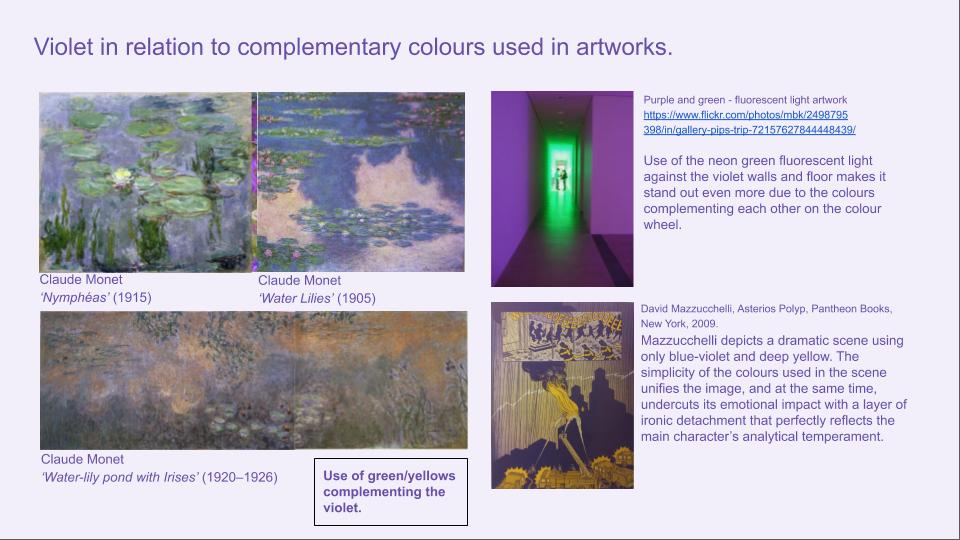
This week were are doing a seminar group presentation about a topic that each group picked.
My group picked the topic of the color “Violet”
In this seminar group we will need to discover the following information on all about the color violet:
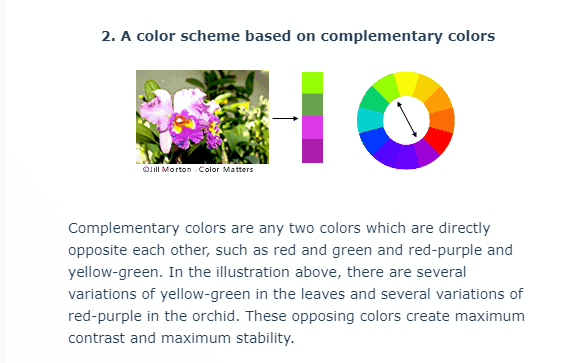
- An analysis of your colour/design topic relative to colour theory (where it sits relative to
the colour wheel i.e. as a primary/secondary or tertiary colour) and, importantly its
relationship to other colours.
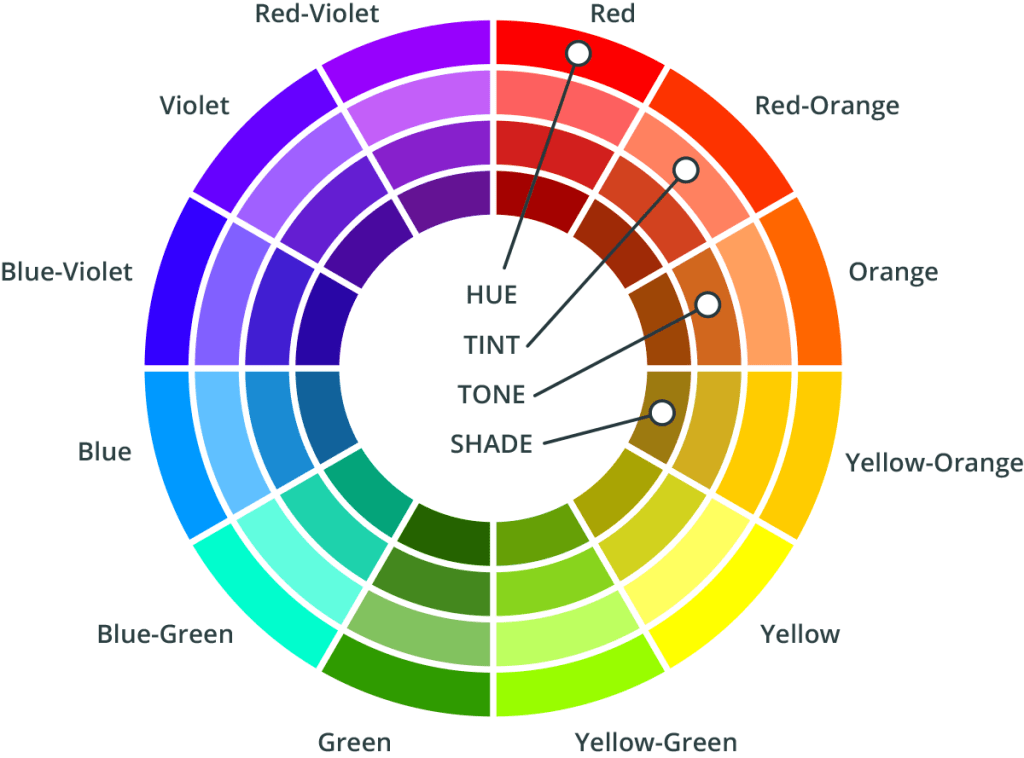
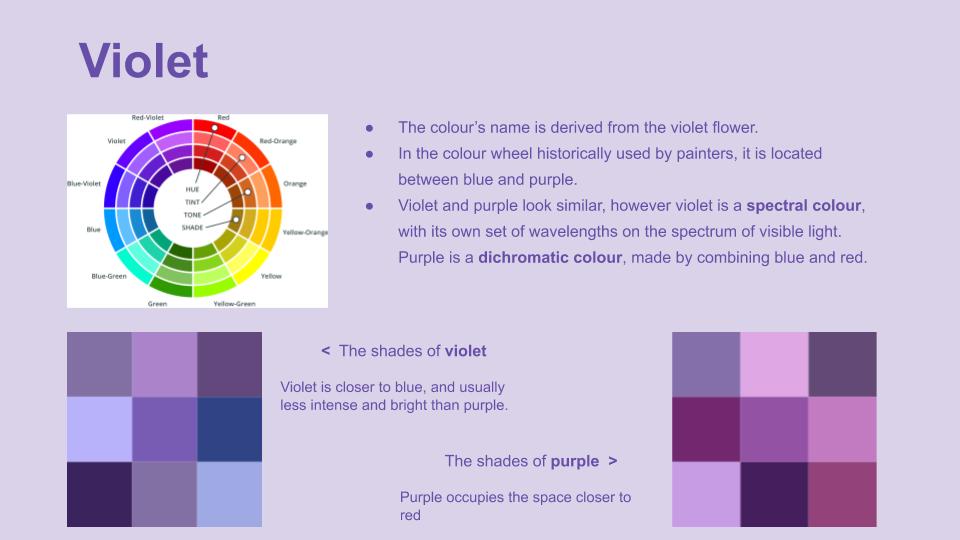
The colour violet sits between red and blue.
2. Research into how the colour was/is made
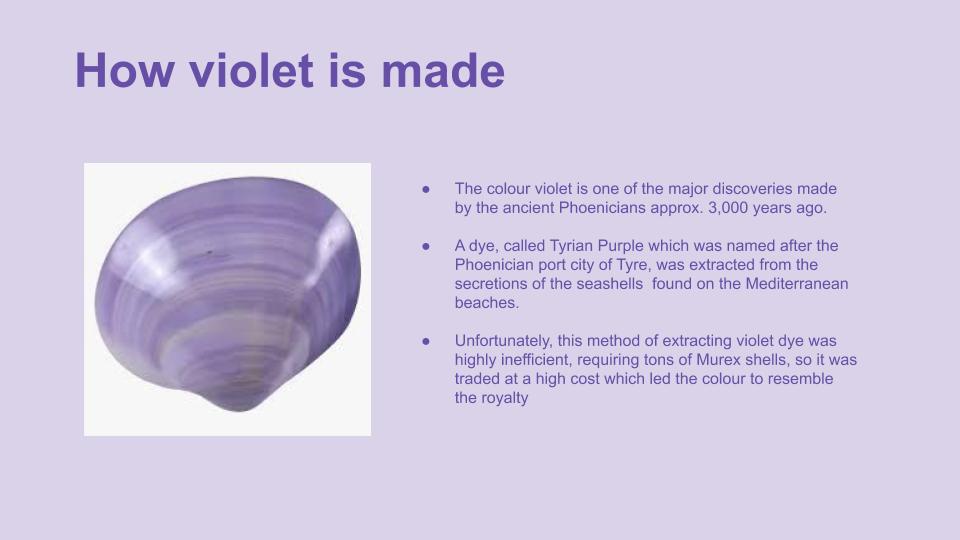
The colour violet is one of the major discoveries made by the ancient Phoenicians approx. 3,000 years ago. A dye, called Tyrian Purple which was named after the Phoenician port city of Tyre, was extracted from the secretions of the seashells found on the Mediterranean beaches. Unfortunately, this method of extracting violet dye was highly inefficient, requiring tons of Murex shells, so it was traded at a high cost which led the colour to resemble the royalty
3. Research into the different tints/tones and shades of your chosen colour and the names of these. (so your audience can get an idea of a spectrum or range of tints available) Further, consider how different paint company’s brand/curate their ‘strains’ of that colour to differentiate themselves from other paint suppliers on the market (this will allow you to consider how colour is curated/packaged/branded)
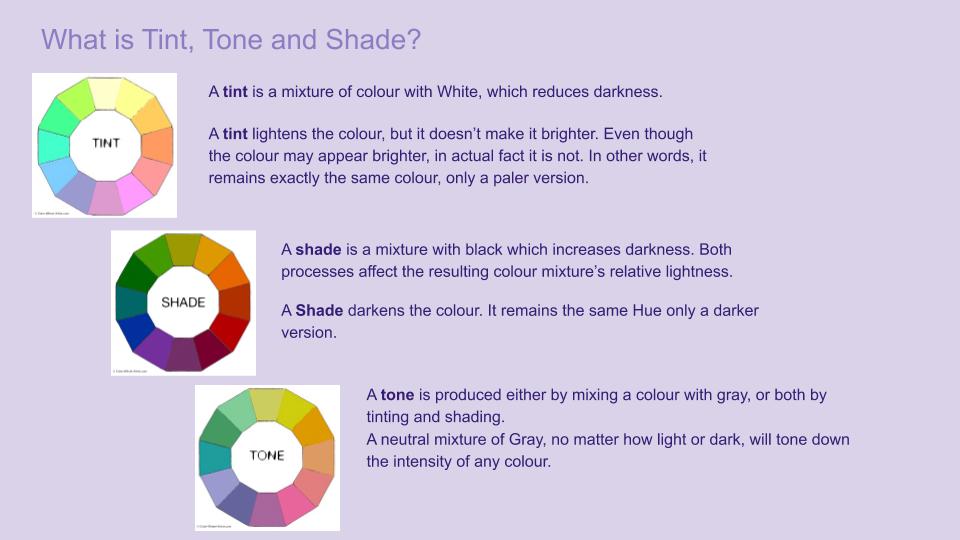
In color theory, a tint is a mixture of colour with White, which reduces darkness, while a shade is a mixture with black which increases darkness. Both processes affect the resulting colour mixture’s relative lightness.
A tone is produced either by mixing a colour with gray, or both by tinting and shading.
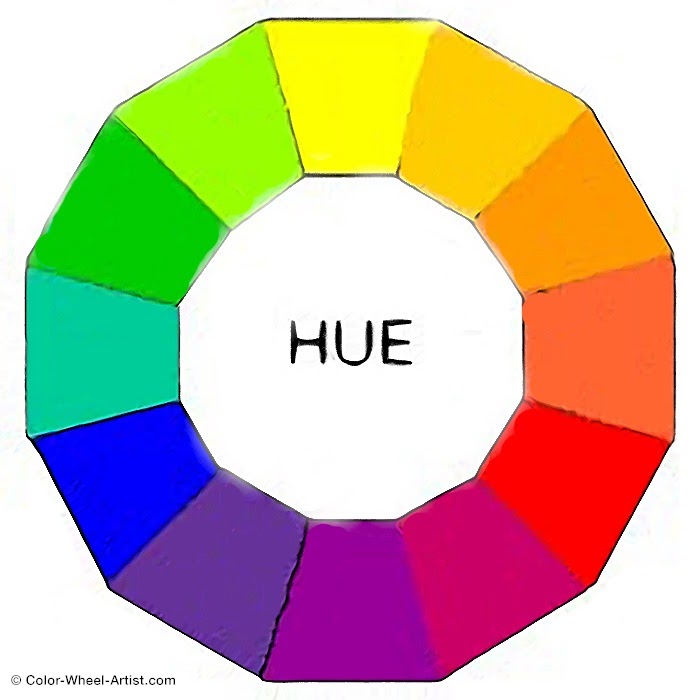
- A Hue refers to the dominant colour family of the specific colour we are looking at. White, Black, and gray never referred to as a Hue.
- Hue refers to the origin colour we see. It is made of six Primary and Secondary colours which are Yellow, Orange, Red, Violet, Blue and Green.
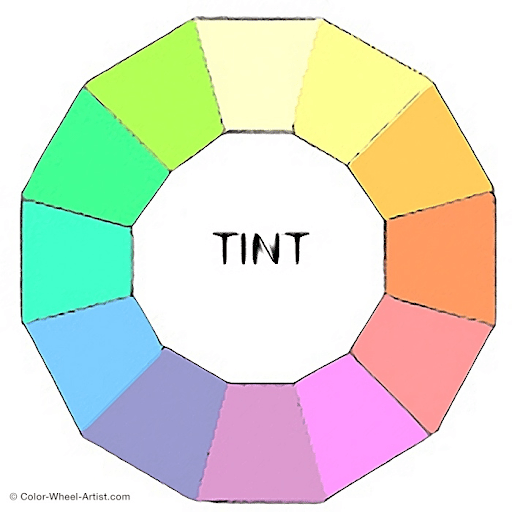
- A tint is also called Pastel, Colour theory defines a true tint as any Hue or mixture of pure colours with only white added.
- A tint lightens the colour, but it doesn’t make it brighter. Even though the colour may appear brighter, in actual fact it is not. In other words, it remains exactly the same colour, only a paler version.
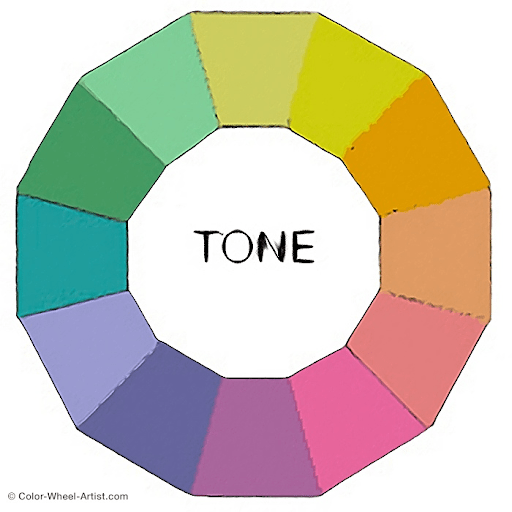
- Colour Theory defines a true Tone as any Hue or mixture of pure colours with only grey added.
- A neutral mixture of Gray, no matter how light or dark, will tone down the intensity of any colour.
- Toned colours are generally considered more pleasing to the eye. They are complex, subtle and sophisticated
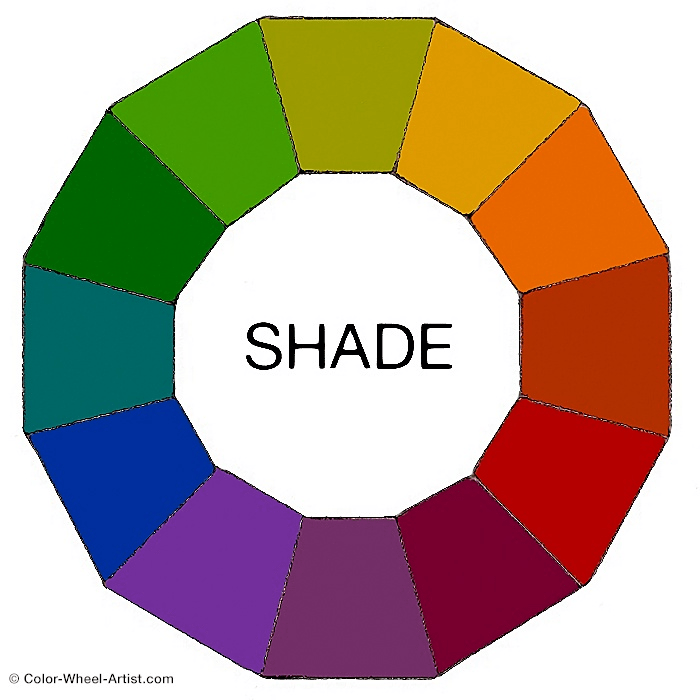
- Colour Theory defines a true Shade as any pure Hue or mixture of pure colours with only Black added.
- A Shade darkens the colour. It remains the same Hue only a darker version.
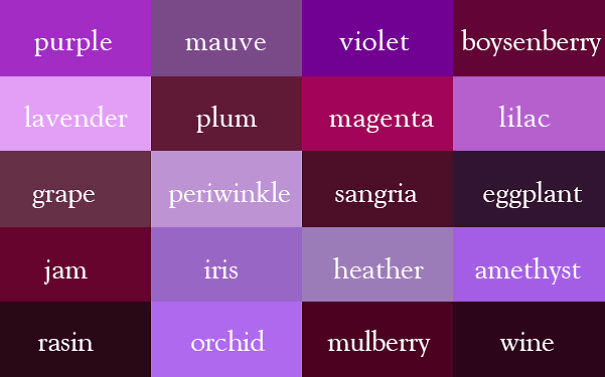
Dulux
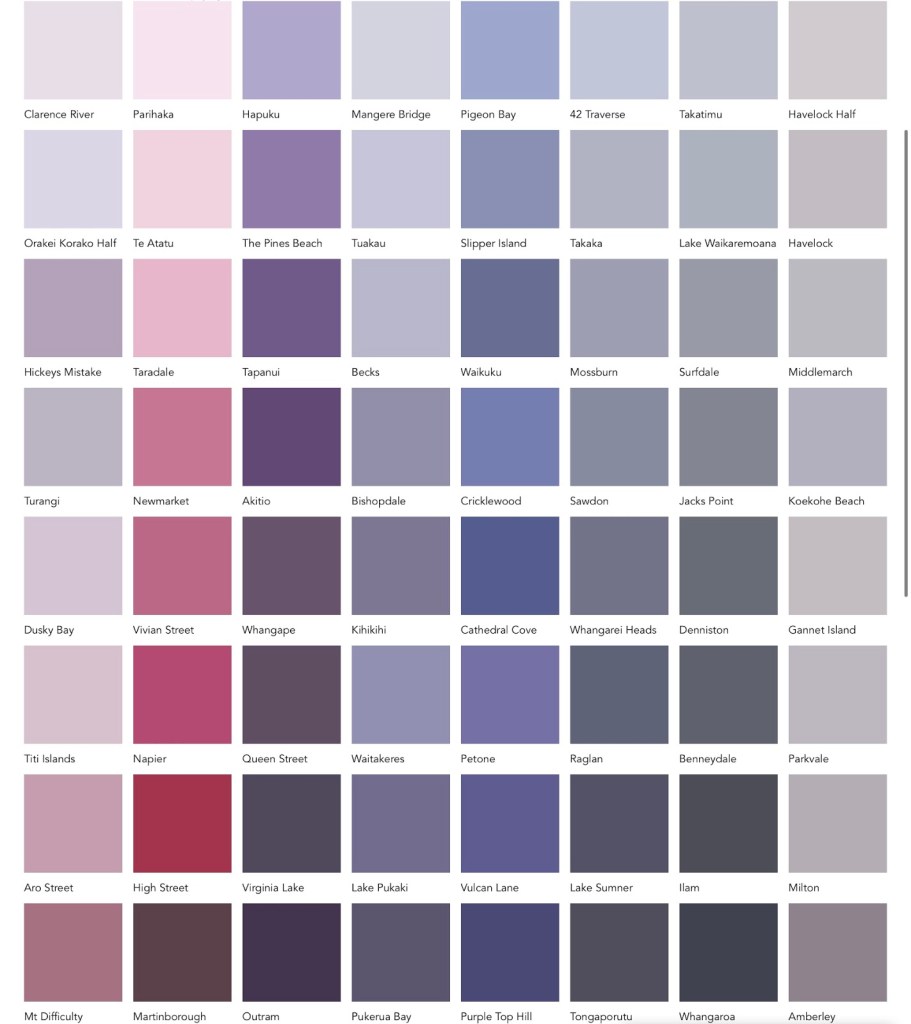
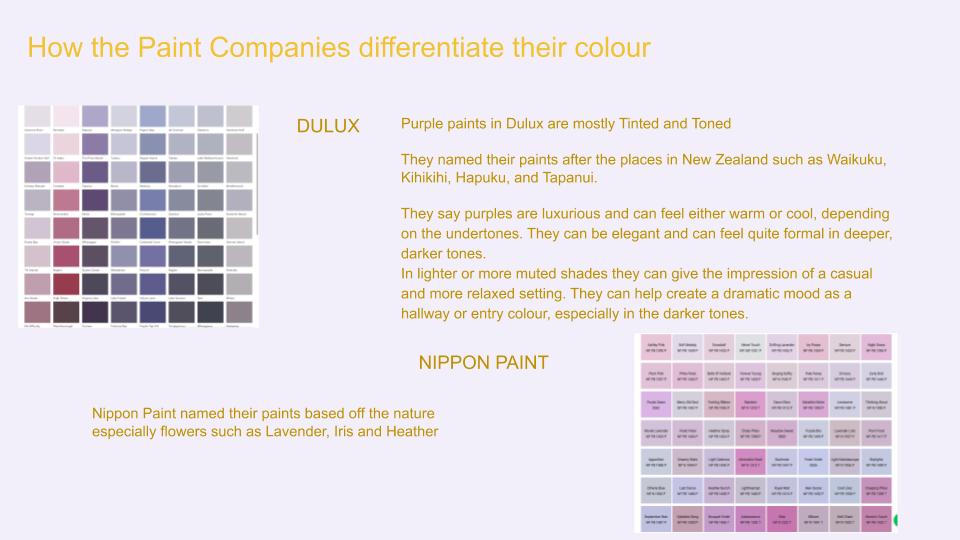
- Purple paints in Dulux are mostly Tinted and Toned.
- They say purples are luxurious and can feel either warm or cool, depending on the undertones. They can be elegant and can feel quite formal in deeper, darker tones. In lighter or more muted shades they can give the impression of a casual and more relaxed setting. They can help create a dramatic mood as a hallway or entry colour, especially in the darker tones.
Resene
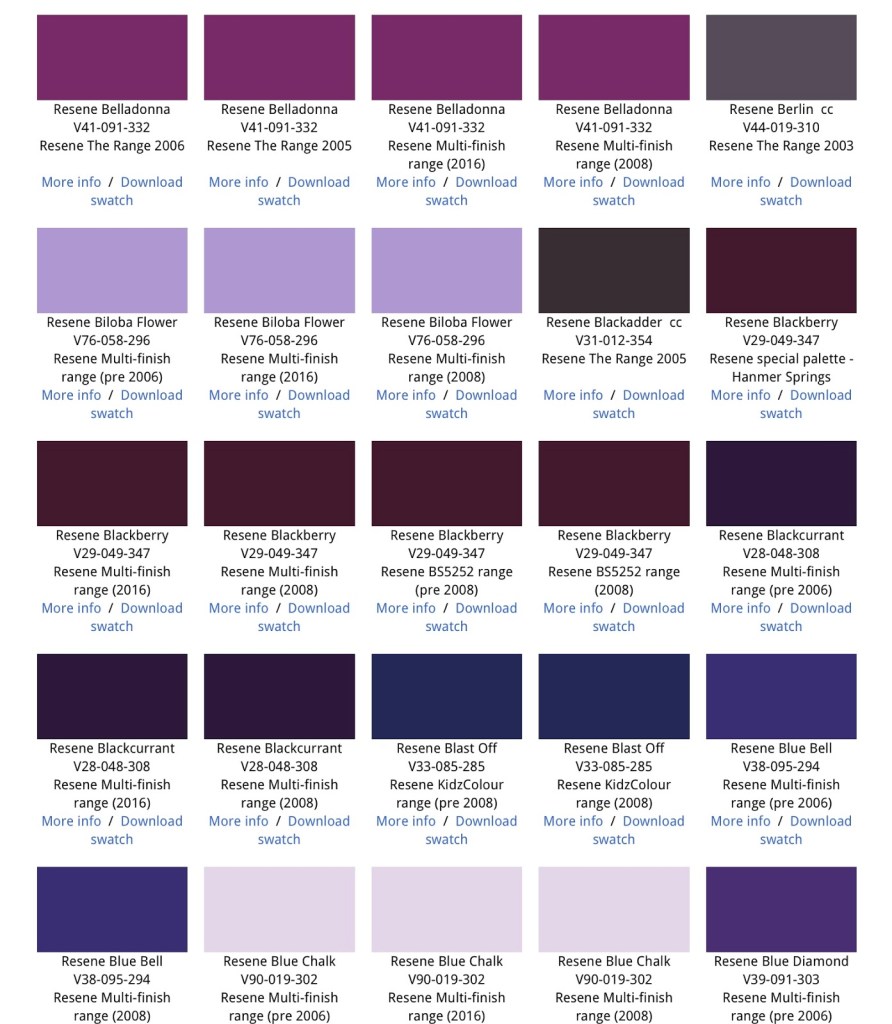
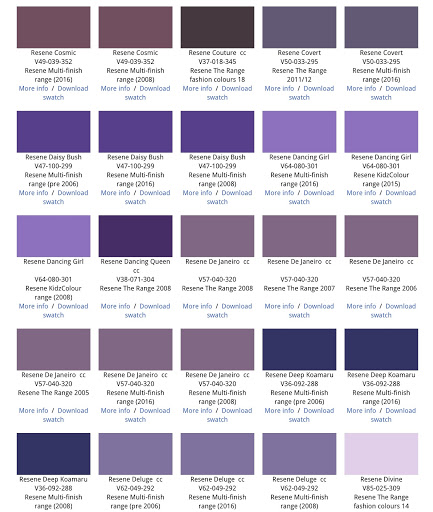
- Purple paints in Resene have various spectrums with shades and tints.
4. An analysis of the symbolic/cultural meanings of colour and how these might change depending upon the context (e.g. The use of yellow in North American (e.g. Mexican) architecture and the use of yellow in a European tradition.
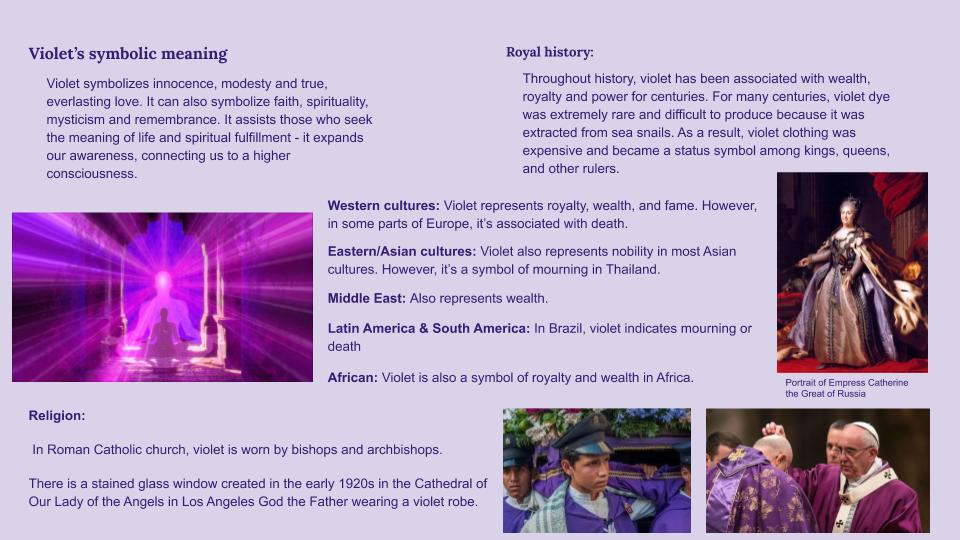
Violet symbolizes innocence, modesty and true, everlasting love. It can also symbolize faith, spirituality, mysticism and remembrance. It assists those who seek the meaning of life and spiritual fulfillment – it expands our awareness, connecting us to a higher consciousness. For this it is associated with transformation of the soul and the philosophers of the world are often attracted to it.
Throughout history, violet has been associated with royalty, wealth, power, exclusivity, and fame are common themes for the color violet across many Eastern and Western cultures. For many centuries, violet dye was extremely rare and difficult to produce because it was extracted from sea snails. As a result, violet clothing was expensive and became a status symbol among kings, queens, and other rulers.
Just as black is the traditional color for death and grieving in many cultures, violet shares the same meaning in some European nations, including the U.K. and Italy, as well as Brazil, Thailand, India, and among many Catholics. In Thailand and Brazil, violet is customarily worn alongside black when mourning of the death of a loved one, and in Brazilian culture, it is considered unlucky to wear violet when not attending a funeral or related service.
In the United States, violet – for honor and courage – is represented by the violet heart, the military’s highest award given to soldiers, sailors, Marines, and airmen for their acts of bravery.
Historically in Japan only the highest ranked Buddhist monks wore violet robes.
My models:
Model A

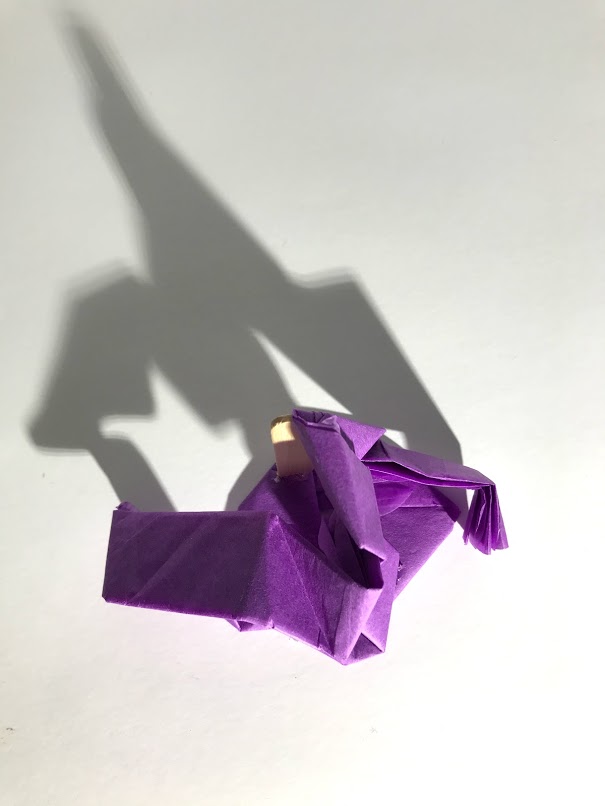
Model E
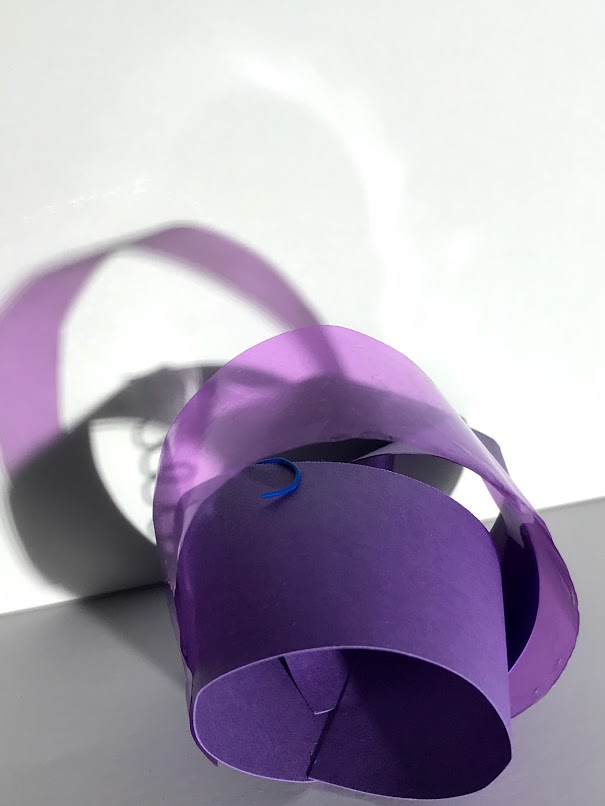
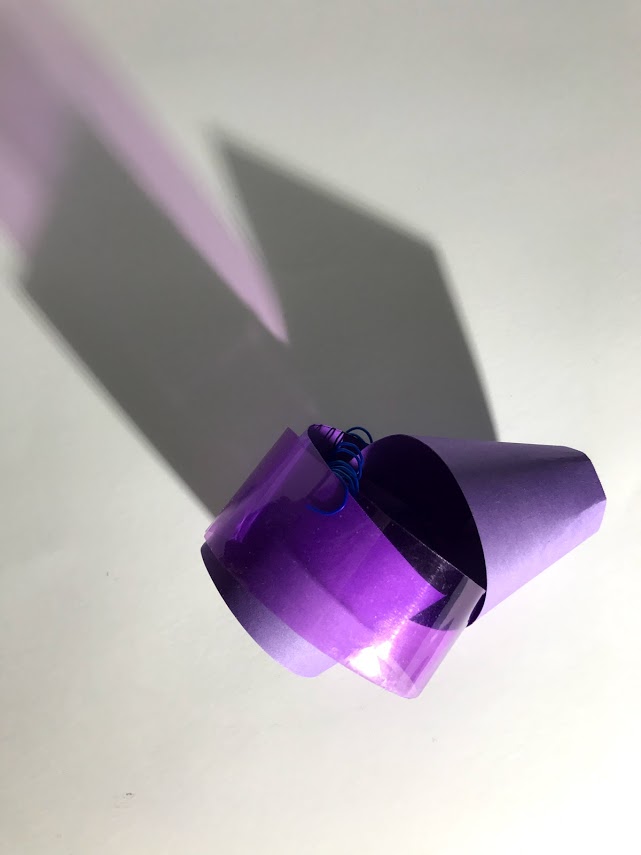
Model U
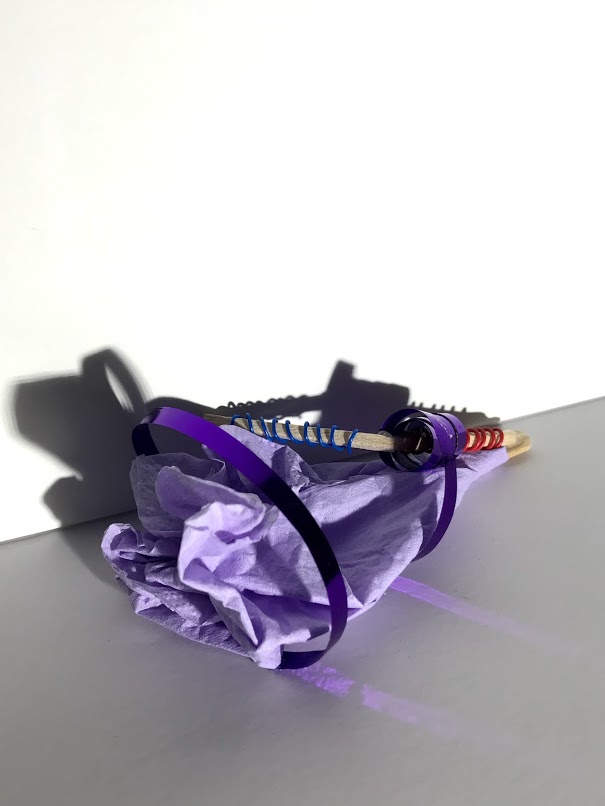
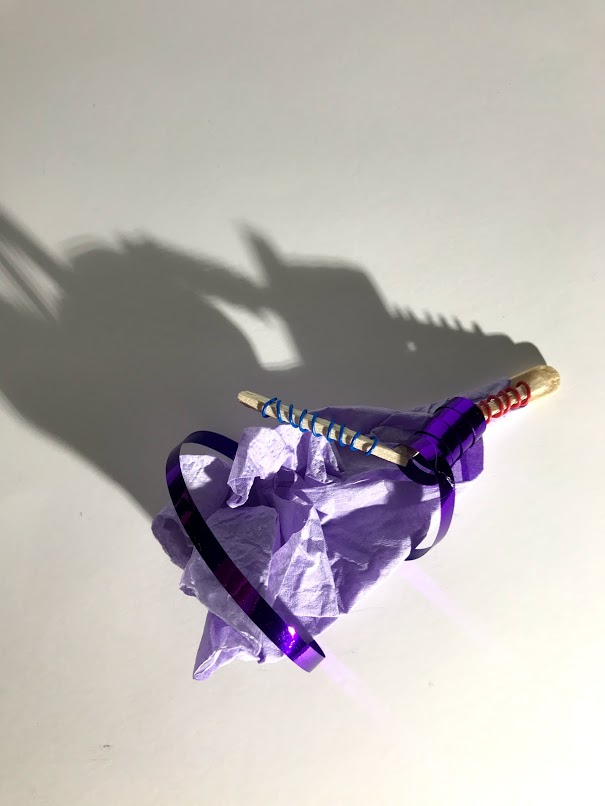
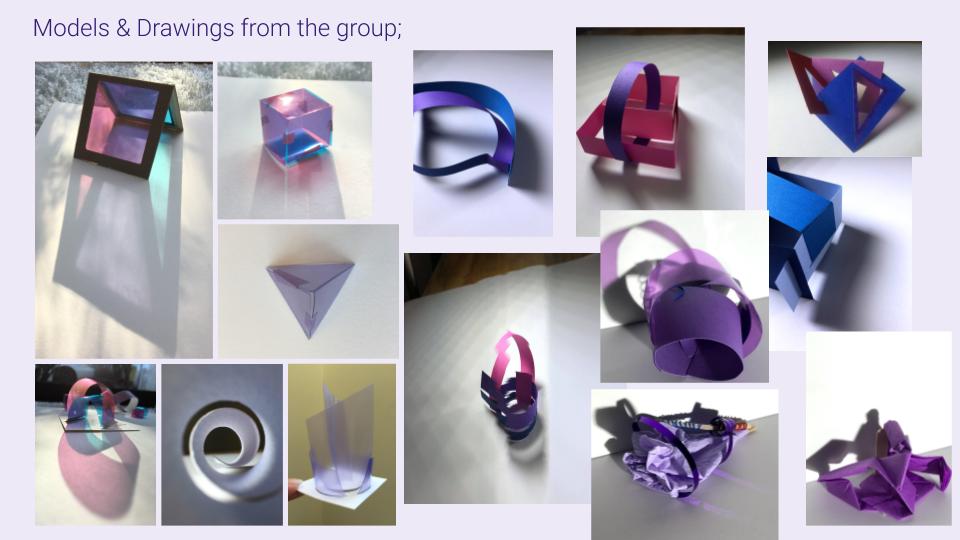
My group models
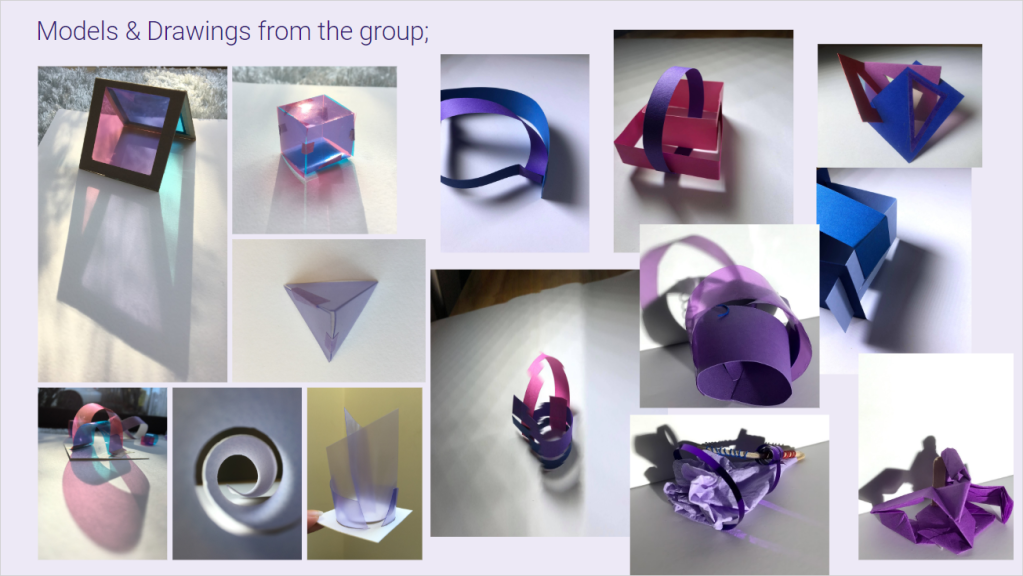
Below is my group’s presentation slides